
Table of Contents
- 1. Introduction: The return of the physical economy
- 2. The results
- 3. Explore the results in full
- 4. Authors
- 5. Methodology
Introduction: The return of the physical economy
Britain’s strengths lie in the intangible economy, but our biggest constraints are physical. This means that, whether you believe Britain’s economic future lies in reindustrialisation or doubling down on services, you are likely to arrive at similar policy conclusions: we need to get better at building stuff.
That is, to the extent that it is possible to summarise the views of 100 economists, the broad conclusion of this year’s UK Growth Survey. It is a shortage of physical housing that holds back urban economies, particularly in London and the Southeast. It is poor physical infrastructure, particularly transport, that prevents agglomeration elsewhere. And a lack of energy and grid infrastructure holds back both traditional and frontier industries.
The good news is that many of the biggest barriers to building are self-imposed, and do not require more public spending commitments. This is particularly welcome in the context of Britain’s record-high borrowing costs, which have just gotten worse, amidst a global bond crisis.
The Chancellor finds himself even more constrained than his predecessor, with less fiscal headroom, against a backdrop of high inflation and likely rate rises. Anything which can boost growth without costing money is surely needed now more than ever.
Every year we ask a select group of economists and policy researchers what the UK should do to boost growth. This was our biggest survey yet, with over 100 respondents from across the UK (and some international ones too).
Despite having new, and more, respondents, we can observe similar trends to last year. Respondents generally thought political capital should be spent on planning reform, building energy capacity, and reducing regulatory burdens. Compared to last year, there was a greater prioritisation of building grid connections, perhaps because of the growing importance of data centres.
We also added in new questions on taxing wealth, price controls, devolution and AI. Our respondents were generally supportive of fiscal devolution but more mixed on whether regulatory levers should be devolved. Economists were not supportive of rent controls, or indeed other price controls, as an effective cost of living intervention. Our respondents were generally bullish about AI meaningfully boosting UK productivity before the end of the decade.
A key story is the role of the physical economy in constraining Britain’s growth prospect. If the Government can fix this – by addressing land use, energy production and transport infrastructure – there are huge gains on the table, that could be felt in every postcode.
The results
1. Prioritisation
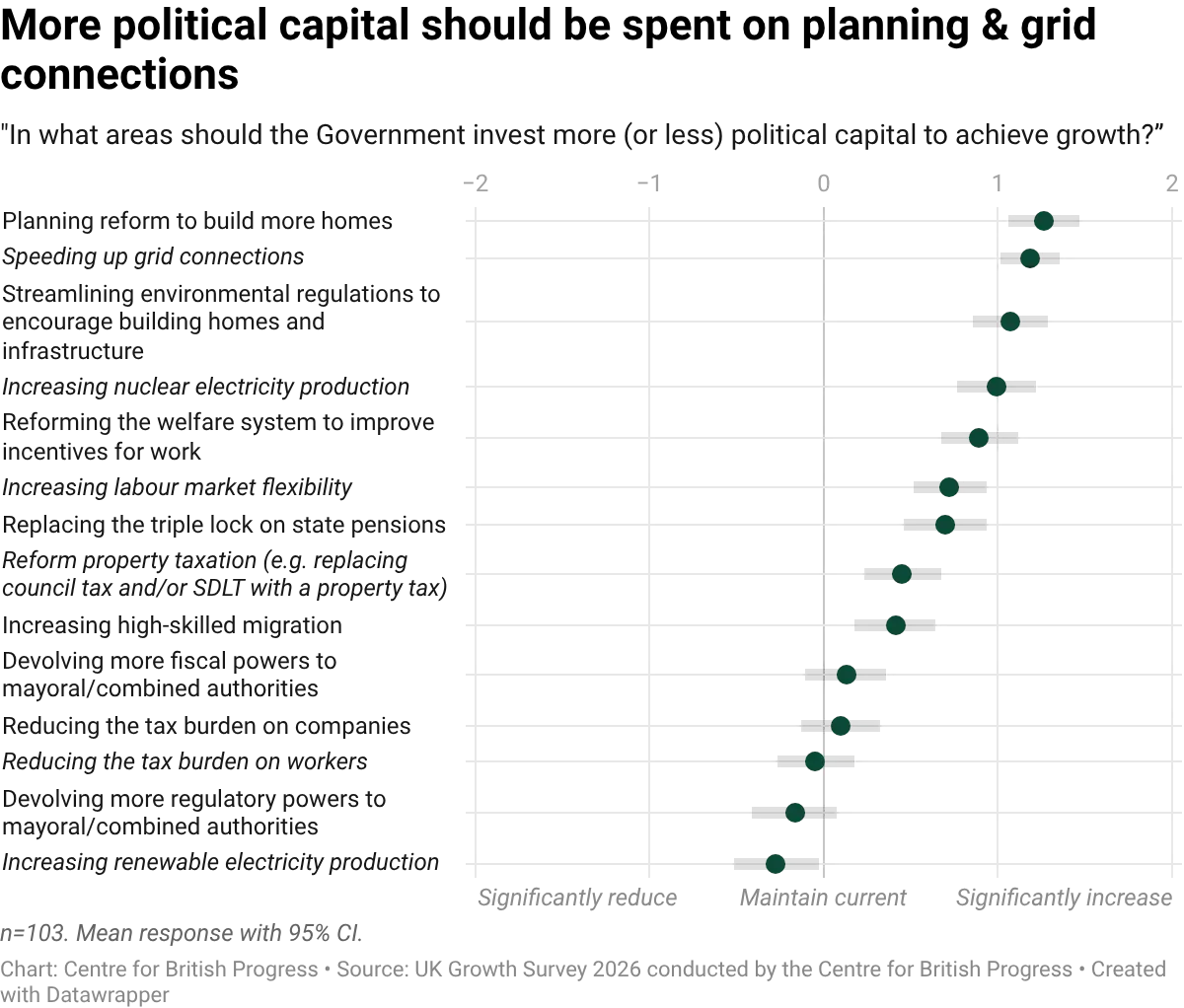
We asked responders “In what areas should the Government invest more (or less) political capital to achieve growth?”
This was defined as being willing to take on special interest groups, internal or external political factions or even voter groups for the sake of achieving growth. We explicitly asked respondents not to answer in terms of spending priorities, as this was addressed in the next question.
The two highest ranked political capital priorities related to building more: planning reform for homes, and speeding up grid connections.
In terms of Government spending, respondents were generally in favour of spending more on utilities; particularly nuclear energy, water infrastructure and the grid. Economists favoured reducing welfare & social security spending, and spending on the state pension.
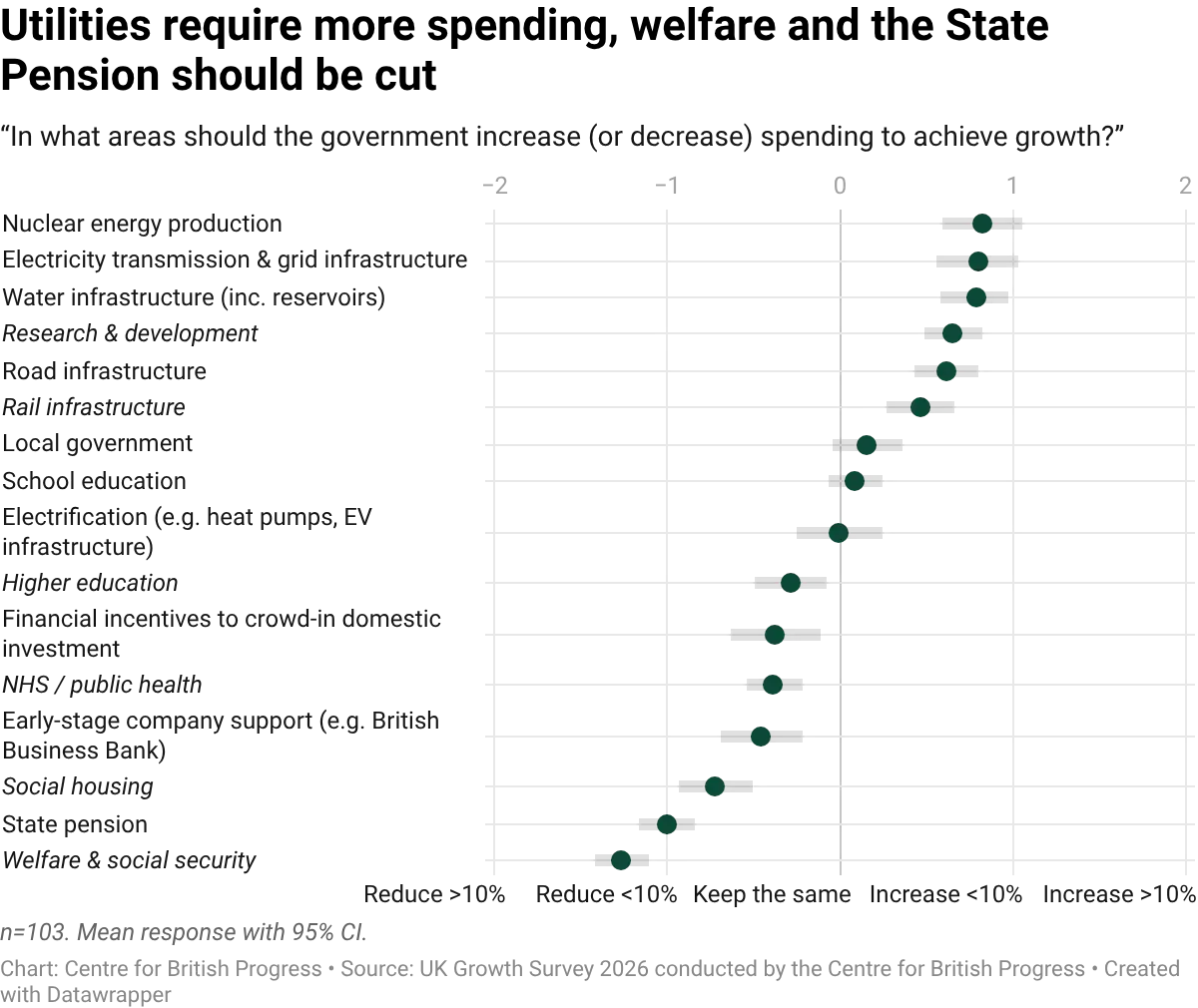
In the freeform responses, respondents gave a bit more colour about what this might look like. Several people cited the importance of helping ‘NEETs’ (those not in employment, education or training), and suggested that welfare policy could be designed to better incentivise work for young people. When it came to utilities spending, there was more enthusiasm for nuclear and the grid, rather than renewable energy projects. Others raised concerns about the value for money of large infrastructure projects.
We asked respondents to identify what the Government should focus on over the next year (note that the survey was completed after the new Prime Minister took office). The highest ranked priorities were further planning reform, deregulation to support nuclear energy and developing the Oxford-Cambridge growth corridor. Of the options, the lowest ranked were building more social housing and devolving regulatory powers to mayors.

2. Fiscal policy and cost of living
While British households face a cost of living crisis, the Exchequer faces limited fiscal headroom and record borrowing costs, which means the Government has limited room for manoeuvre to help those who are struggling. Energy prices, expected to jump by 25% next year, will add further pressure to the cost of living.
Price controls
In this context, several organisations have proposed active, non-fiscal interventions to control the cost of living, such as through price caps and rent controls. However, those we surveyed were sceptical that these would be helpful. The vast majority (88%) said that introducing local rent controls would not improve the availability of affordable rental housing, and 93% said that price controls on essential goods are not an effective way of protecting households from high inflation.

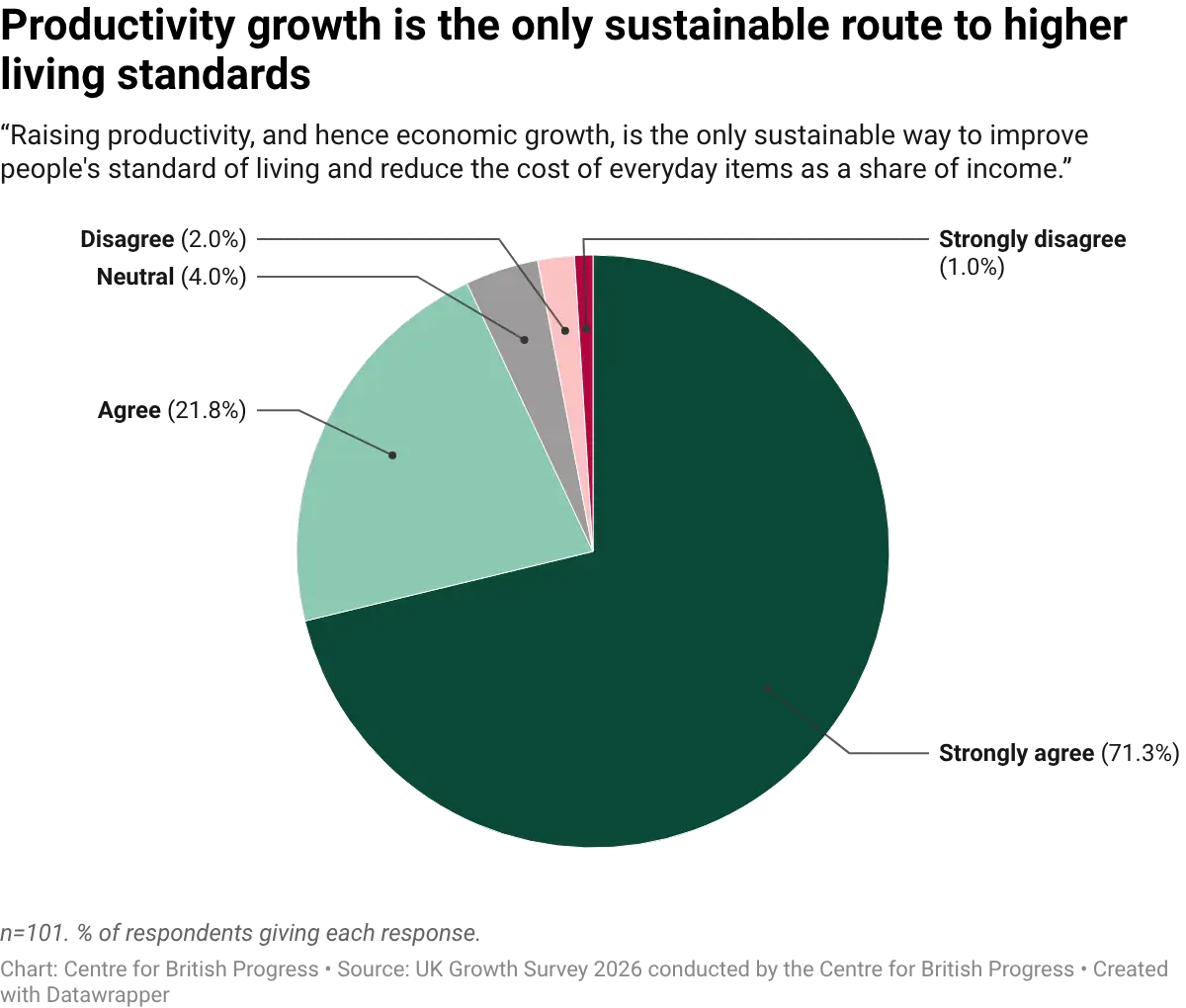
Our respondents also generally felt that increasing the minimum wage would increase cost of living pressures. Although some households would benefit from a rise in wages, the overall effect could be to increase prices across the economy. Instead, our respondents agreed that raising productivity – and therefore real wages – should be the priority for addressing the cost of living.
Raising taxes
We asked respondents which taxes they would prioritise for revenue increases, relative to their economic cost. The responses were almost identical to last year, with the only notable difference being a preference for VAT over fuel duty. Consumption taxes were more popular, while stamp duties, national insurance contributions and corporation tax were at the bottom of the list.
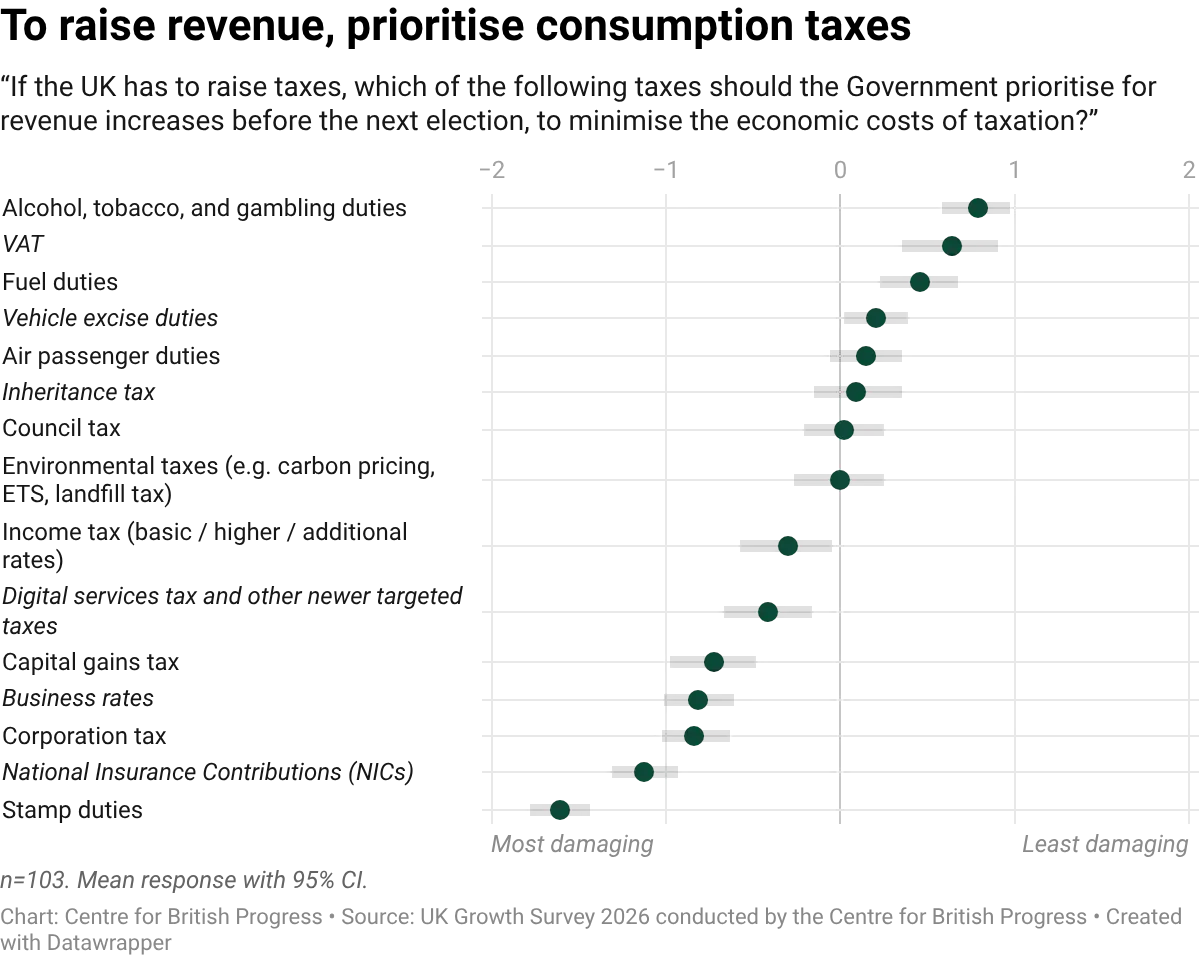
In written responses, several respondents mentioned that expanding bases should take priority over increasing rates. In particular, lowering the VAT threshold, reducing the number of exemptions, and removing the income tax cliff edges. Lots of people also suggested road pricing.
Wealth tax
Fiscal constraints have also pushed policymakers to consider a wider range of tax levers, including taxes on wealth. Our respondents felt that some wealth taxes are far more preferable than others. Stamp Duty Land Tax scored as the most damaging by far, with over 90% of respondents rating it as at least moderately damaging, whereas land value taxes were rated the least damaging.
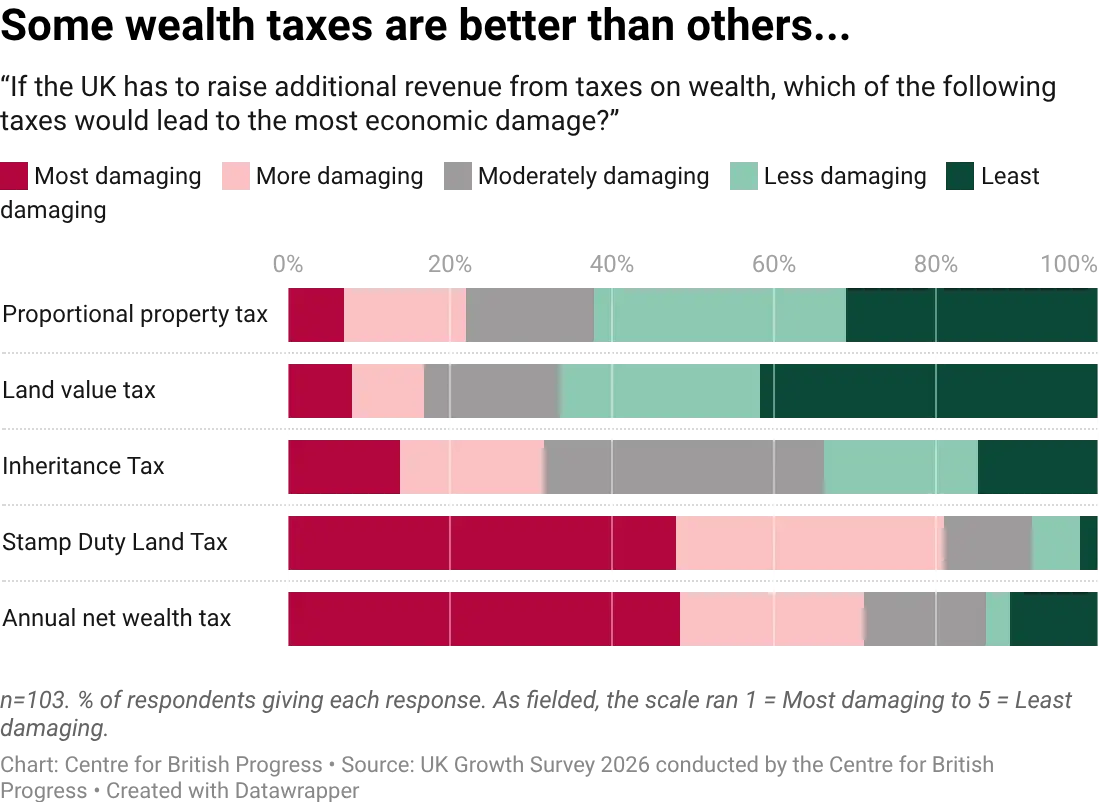
In freeform responses, respondents distinguished between taxing wealth earned from passive income (such as property ownership) versus innovation and risk-taking behaviour. Currently, both are subject to CGT.
Exit tax
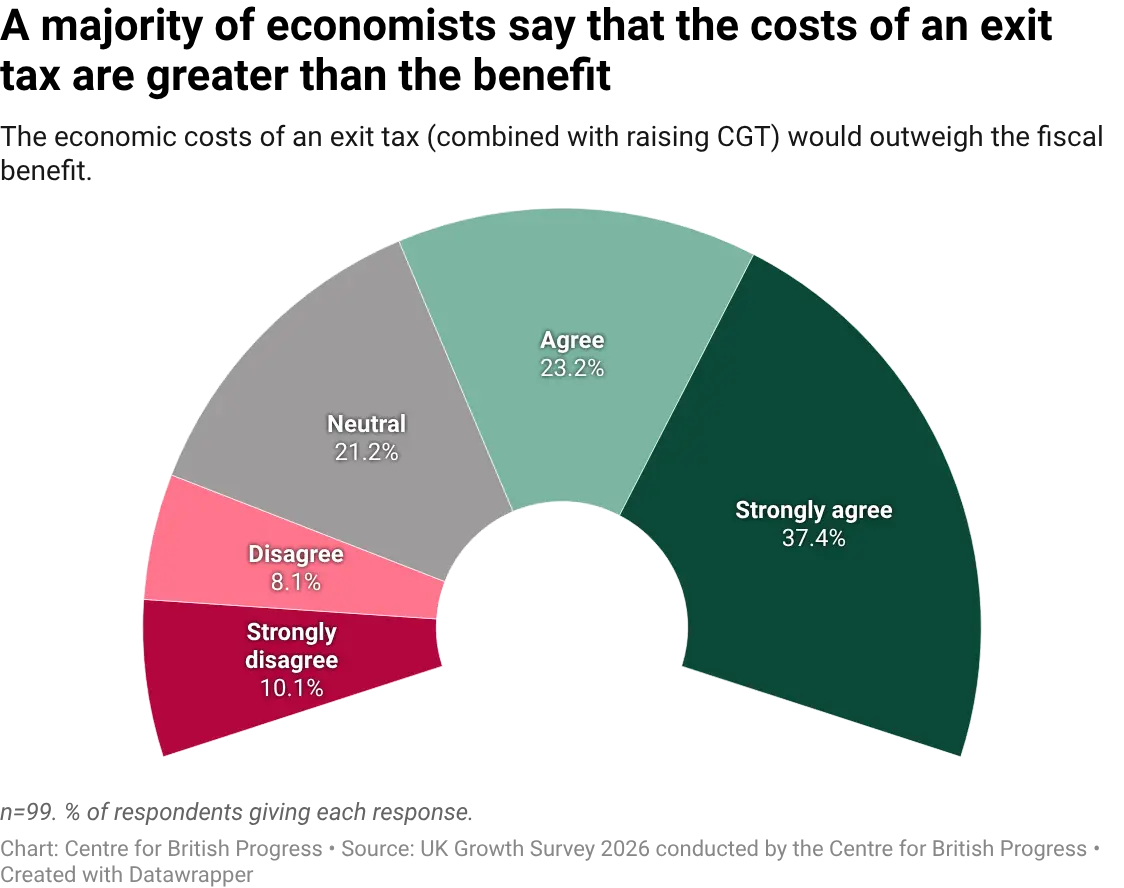
A majority (61%) of respondents said that the costs of an exit tax, combined with raising capital gains tax, outweigh the benefits, though a substantial minority (26%) disagreed. We were interested in testing views on a specific proposal to combine CGT equalisation with an exit tax, to reduce the risk of capital flight in response to a tax rise. However, our respondents were still broadly opposed to this.
Energy bills
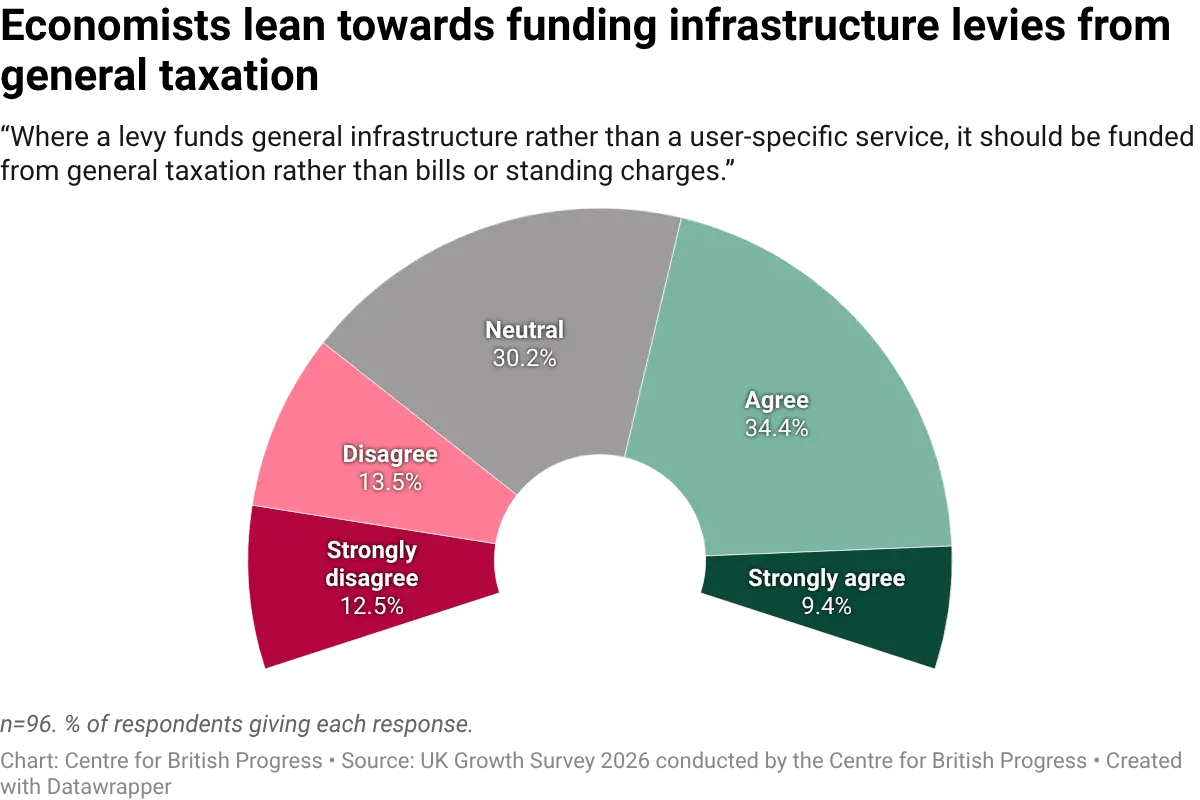
We asked respondents whether infrastructure should be funded using consumer bills or general taxation. This is particularly relevant to how we pay for energy. A substantial share of energy bills (around a quarter) goes towards paying for grid infrastructure, and this is likely to rise further as more renewable energy projects come online. The question is whether the infrastructure component of these costs should be recovered through consumer bills or general taxation.
A plurality of respondents (43.8%) favoured using general taxation, against 26% who opposed this, while 30.2% were unsure.
North Sea extraction
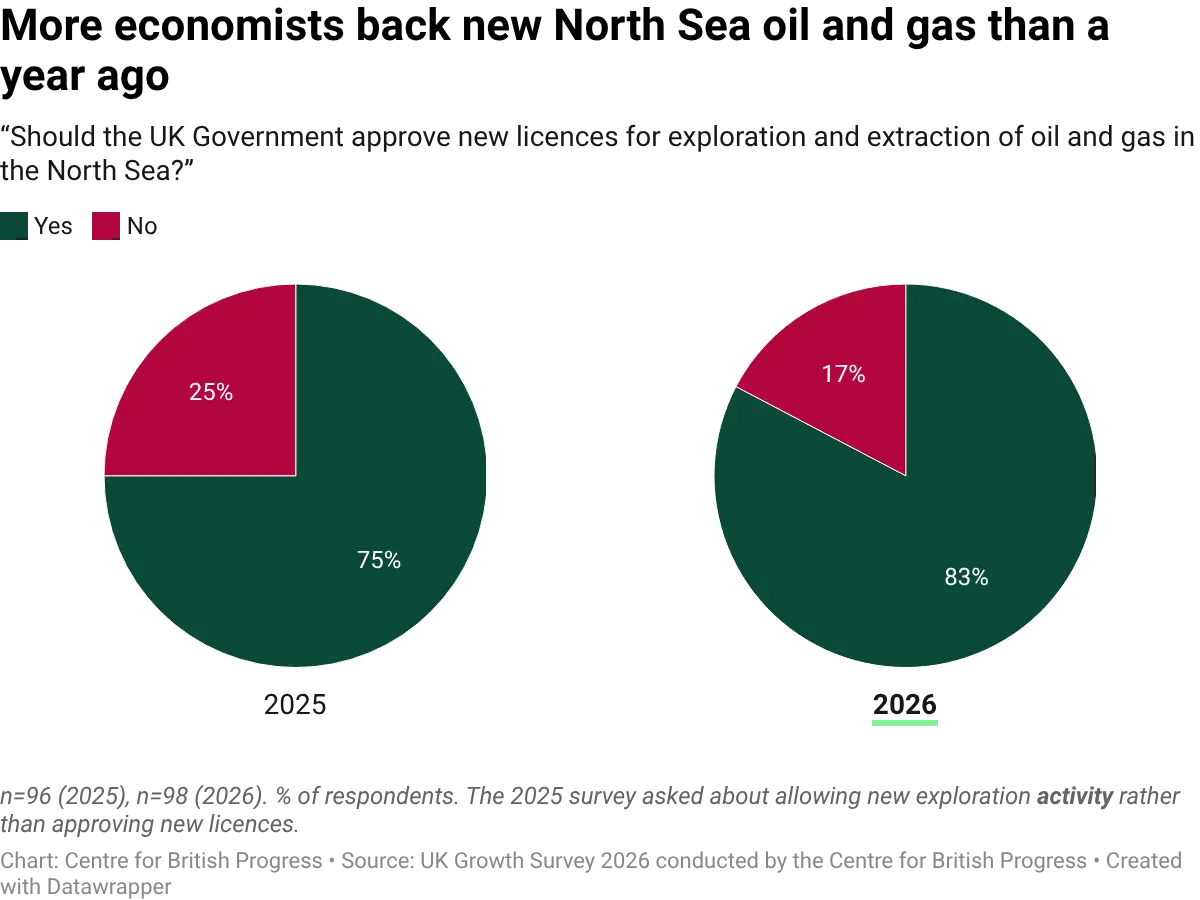
The vast majority of respondents (82.7%) support new oil and gas licences in the North Sea. This is up from 75% last year. Note that this question is about going beyond projects with existing licenses (such as Rosebank and Jackdaw) to allow new exploration.
3. State capacity and devolution
Cost of regulation
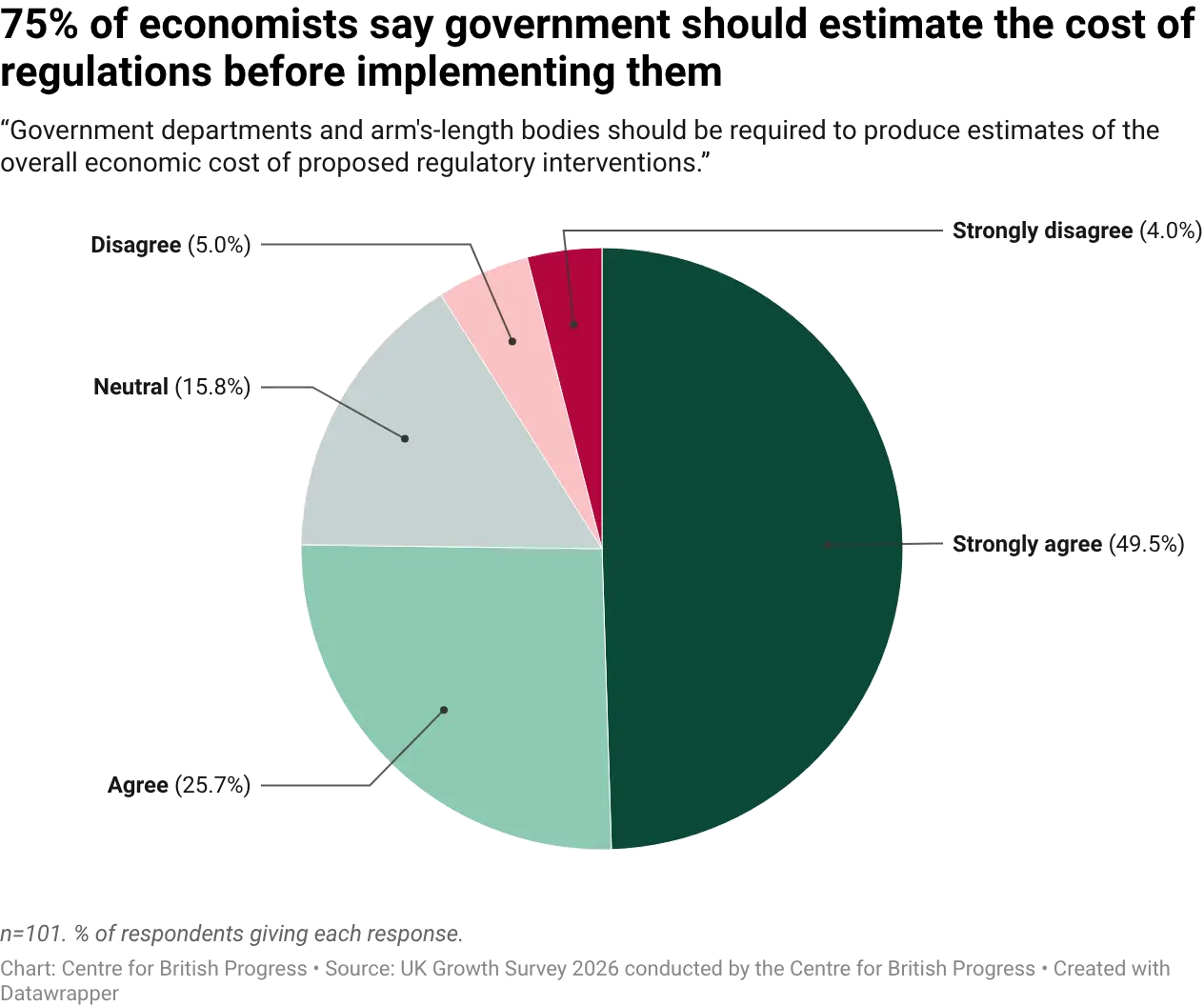
The Government has discussed abolishing or scaling back the Regulatory Policy Committee, an independent public body which advises on the costs associated with different regulations. To help inform these discussions, we asked respondents whether the Government should estimate the cost of regulations before implementing them, something which (perhaps unsurprisingly) was very popular among economists.
Public service delivery
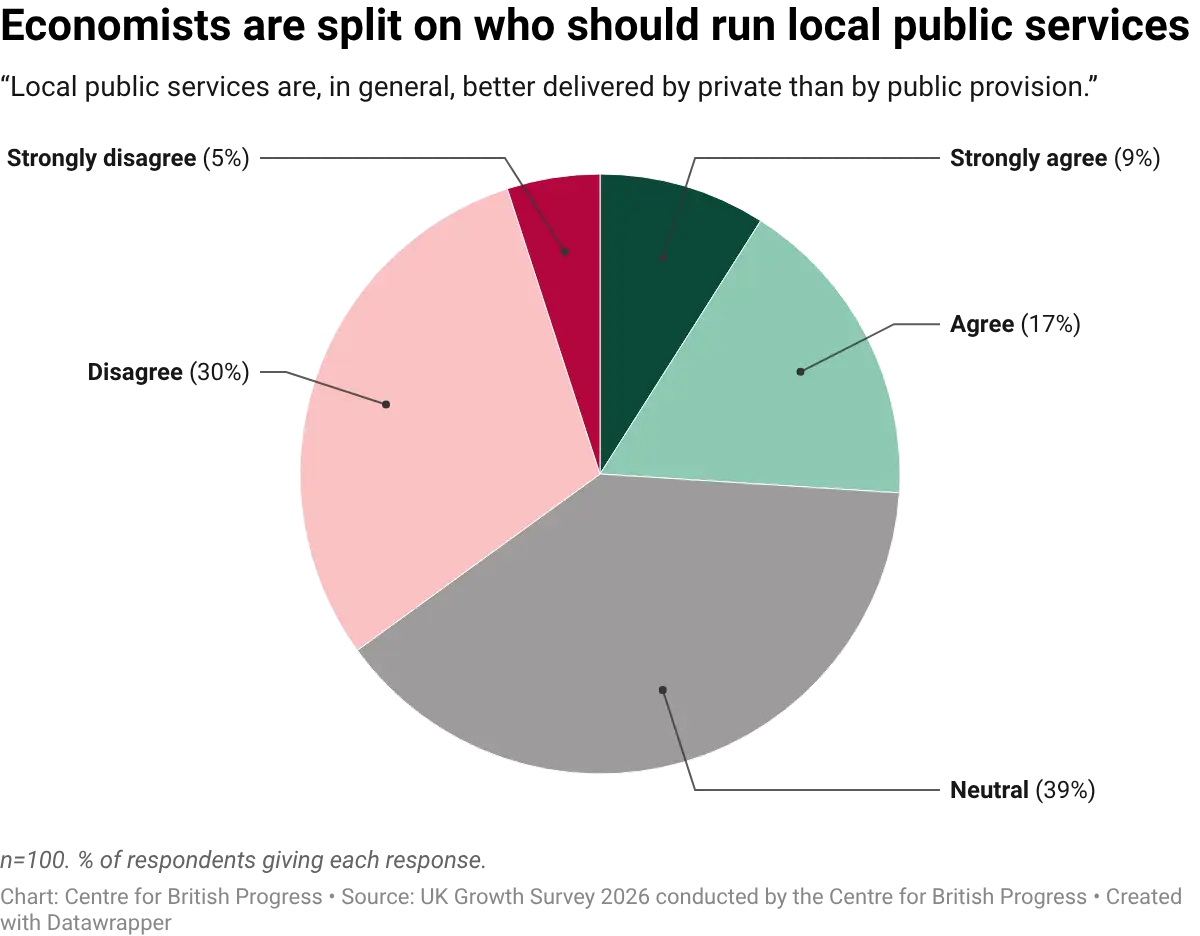
In this section of the survey we were also interested to get respondents’ views on devolution, given that this is a high priority for the new Prime Minister. We found that economists are generally supportive of devolving fiscal powers to Mayors, but less certain about the merits of devolving regulatory powers.

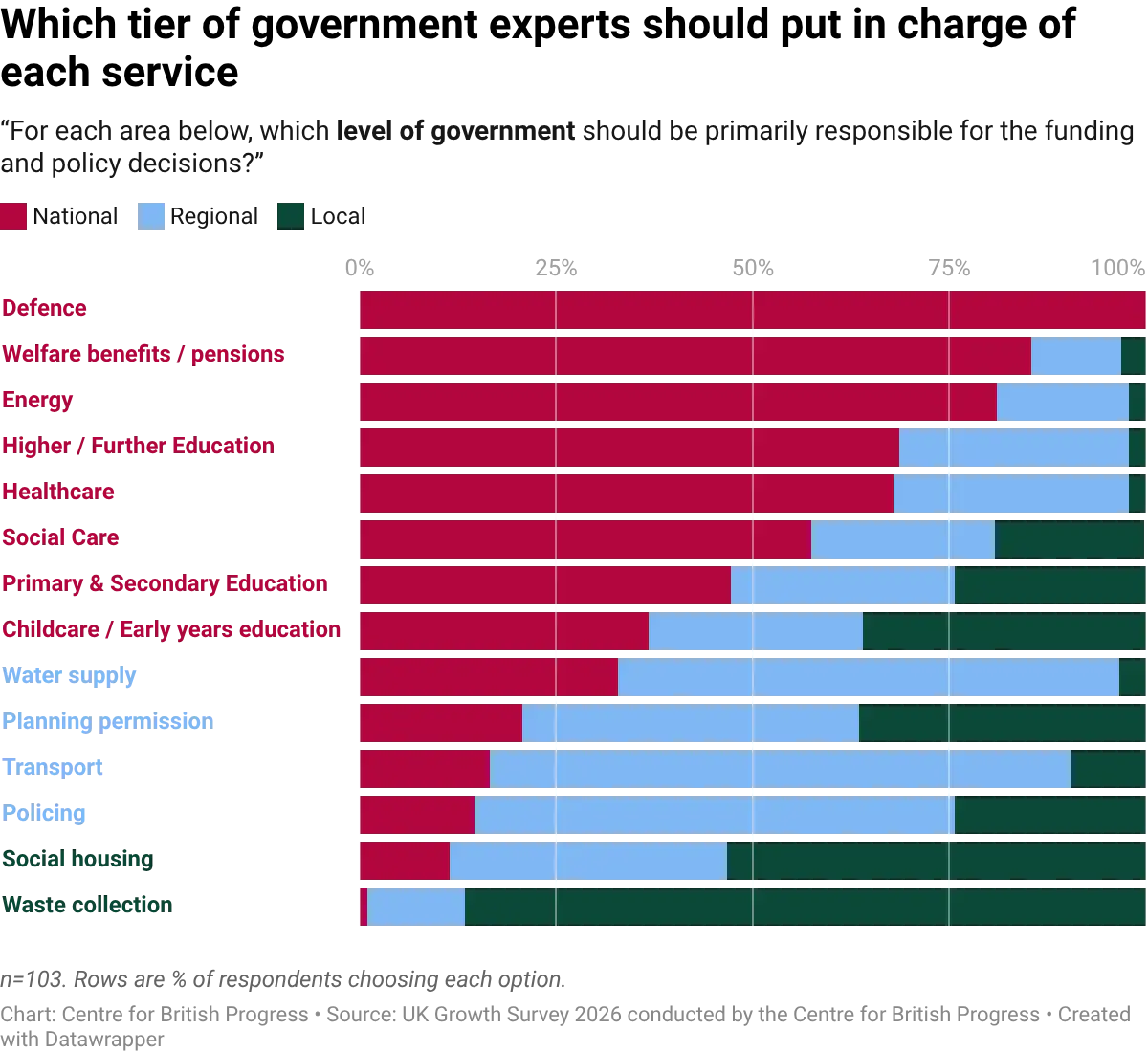
We were interested in getting people’s views on the tier at which different public services ought to be managed (local, regional or national), how they should be delivered (publicly or privately) and how they should be funded (by the state or by service users).
For several services, we asked respondents which tier should be responsible for the service. The results broadly track the actual delivery of these services, with some exceptions. Notably, a majority of respondents thought that water supply and transport should be managed at a regional level, whereas in fact these are national (in the case of water), or mostly local (in the case of transport).
Economists were somewhat against private delivery of local public services, though views were mixed.
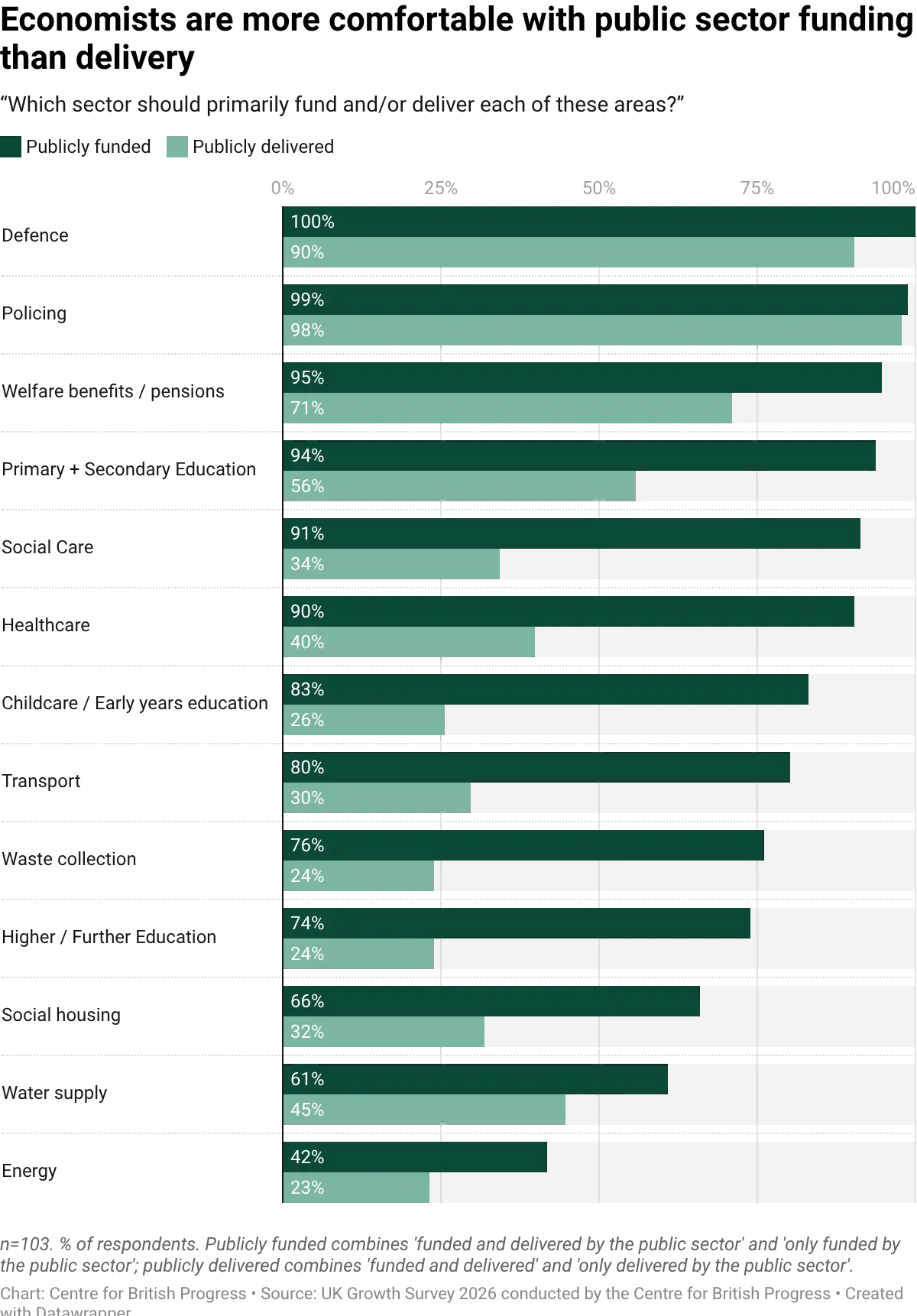
When broken down by different services, our respondents were more keen on the state funding services than providing them. For example, while the vast majority of respondents thought that healthcare should be paid for by the state, only 40% thought that it should be primarily provided by the state. Similarly, 61% thought that water should be publicly funded (it is currently mostly paid for by users), but only 44% thought that water should be publicly delivered.
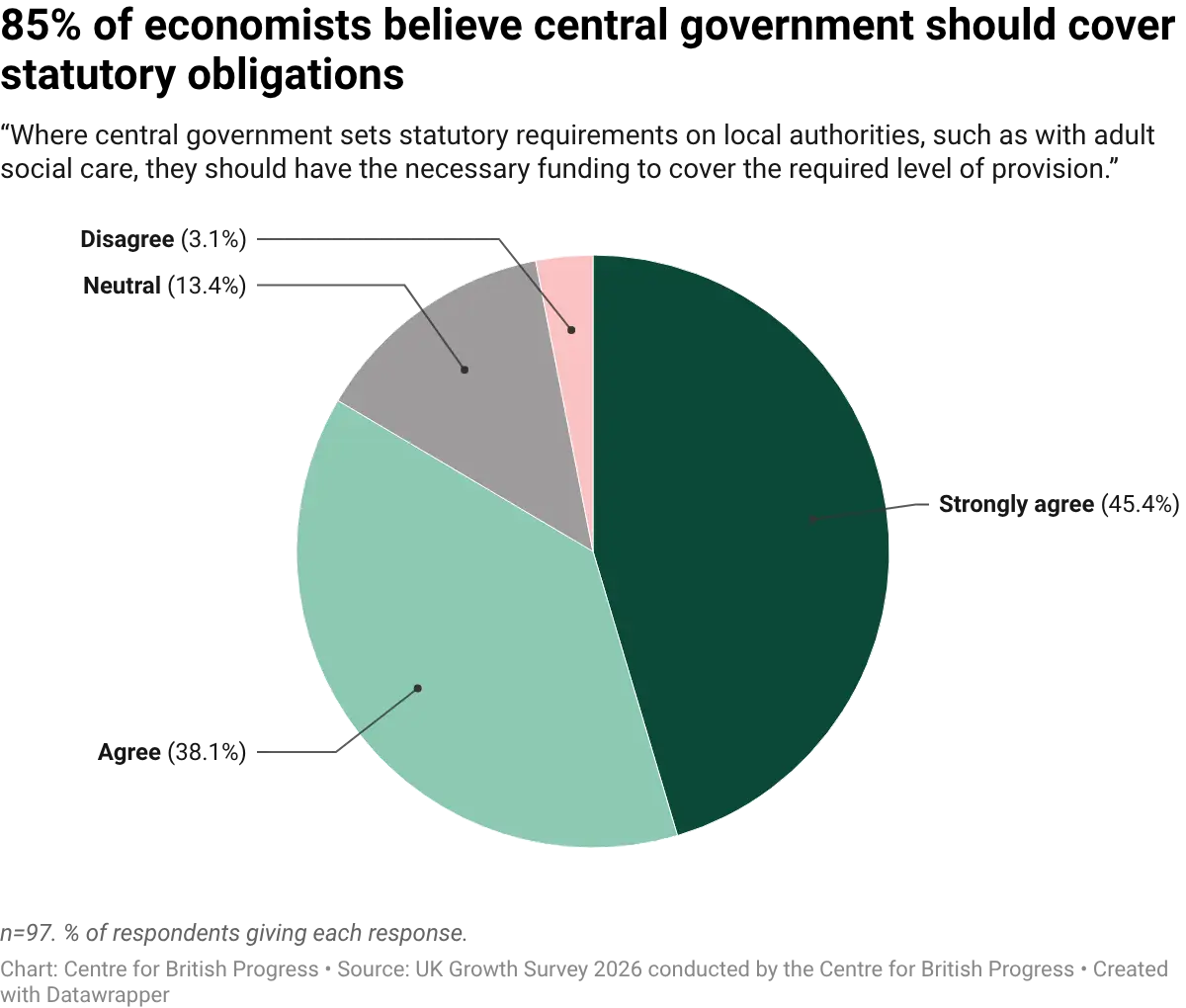
A particular concern is that councils have many statutory duties to deliver certain services, but without requisite funding. 83% of respondents agreed that, where the central government sets statutory requirements on local authorities, they should have the necessary funding to cover the required level of provision.
Planning reform
Given the importance of planning reform to growth (in this and previous surveys), we asked respondents to compare different policy priorities within planning reform. In particular, we wanted to understand whether economists prefer densification of existing urban areas over outward expansions, test what they think of new towns, and their views on social housing. We also differentiated between London and non-London, though the results were broadly similar for both.
The results are pretty clear that densifying existing urban centres is far more impactful for growth than building more social housing or new towns. This is likely to be because new private housing correlates highly with workers moving to areas of economic agglomeration to take higher paying jobs.

This implies that, at least as far as growth is concerned, the Government should focus its efforts on making it easier to build new homes in existing urban areas, rather than prioritising new towns or social housing.
4. AI
In our final section, we asked several new questions about how economists expect AI will change the economy.
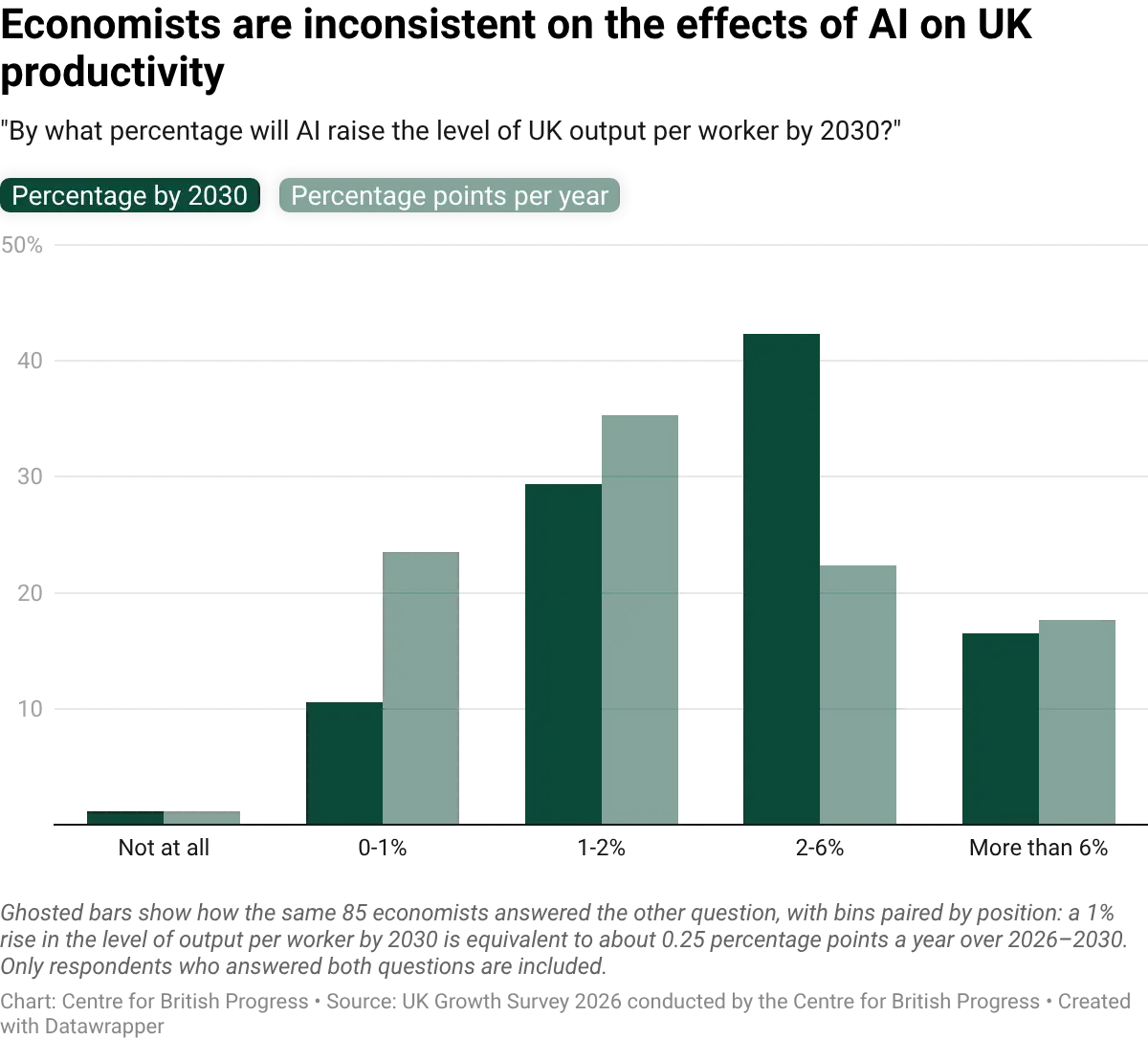
We included two nearly identical questions to which respondents, perhaps worryingly, gave different results. But the general view seems to be that respondents expect AI to improve productivity by between 1-6% over the next five years, or around 0.25-1.5 per year. The OBR assumes medium term annual productivity growth of 1%, and the UK’s trend since the financial crisis (2008) has been around 0.4-0.6%pa. In this context, AI represents a substantial and noticeable boost to productivity, and a decent minority – 16-17% – thought that growth from AI could surpass 1.5% each year, between now and 2030. Almost no one thought that AI would not boost productivity at all.
There are two main ways AI can boost productivity. One is that the AI sector itself grows, as it has done, to be a more important part of the economy. This could be through building new models in the UK, building AI products on top of those models, or building the data centre infrastructure that allows models to be trained or deployed in the UK.
The other route, which is likely to be more important in the long run, is adopting AI across other parts of the economy to improve productivity. For example, AI could radically reduce the cost of many services, from health to law to finance. However, there are many barriers to adoption, including a lack of labour market dynamism (so workers cannot easily move to new sectors), sector-specific regulatory barriers, uncertainty about legal liability, as well as financial costs of adopting AI.
We asked respondents what they thought the Government should prioritise to improve adoption. Labour market dynamism ranked highest, subsidising credits for adoption were unpopular, indicating that the barriers to adoption are more regulatory than financial.

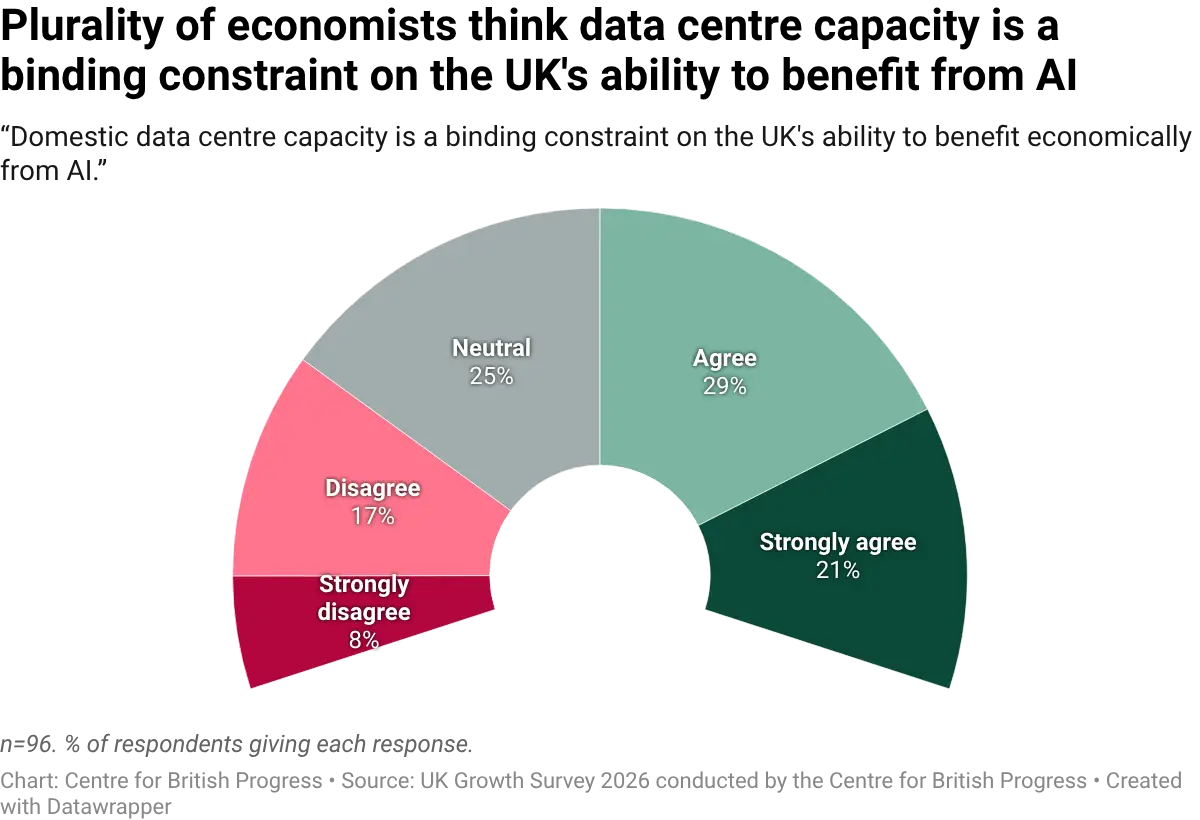
We asked respondents whether they thought data centres are a binding constraint on Britain’s ability to benefit from AI. Views were mixed but tended towards agreeing that data centres are a constraint. Given that data centres are, increasingly, sites of political disagreement, the answer to this question is important to policymakers.
Explore the results in full
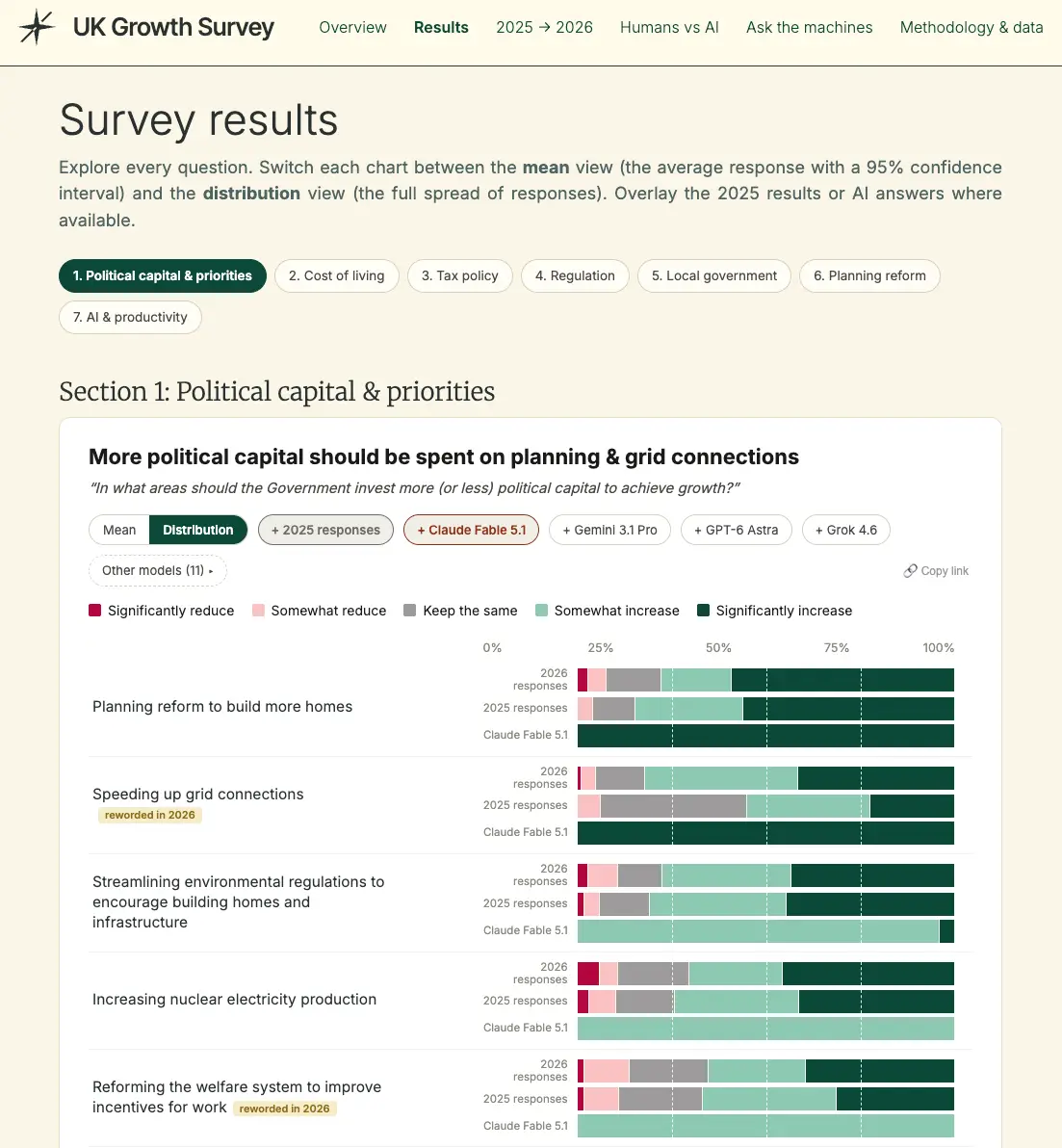
We’ve built a new tool for exploring the full results of this year’s Growth Survey. For every question, you can switch between different visualisations, compare responses with last year’s survey and see how 15 different AI models answered the same questions.
Methodology
We sent the survey to over 400 of Britain's leading economists and economic policy researchers, and a few experts outside the UK who have knowledge of Britain’s economy and policy system. We received 103 responses.
The demographic breakdown was similar to last year, despite our best efforts to increase the representativeness of responses across gender and location.
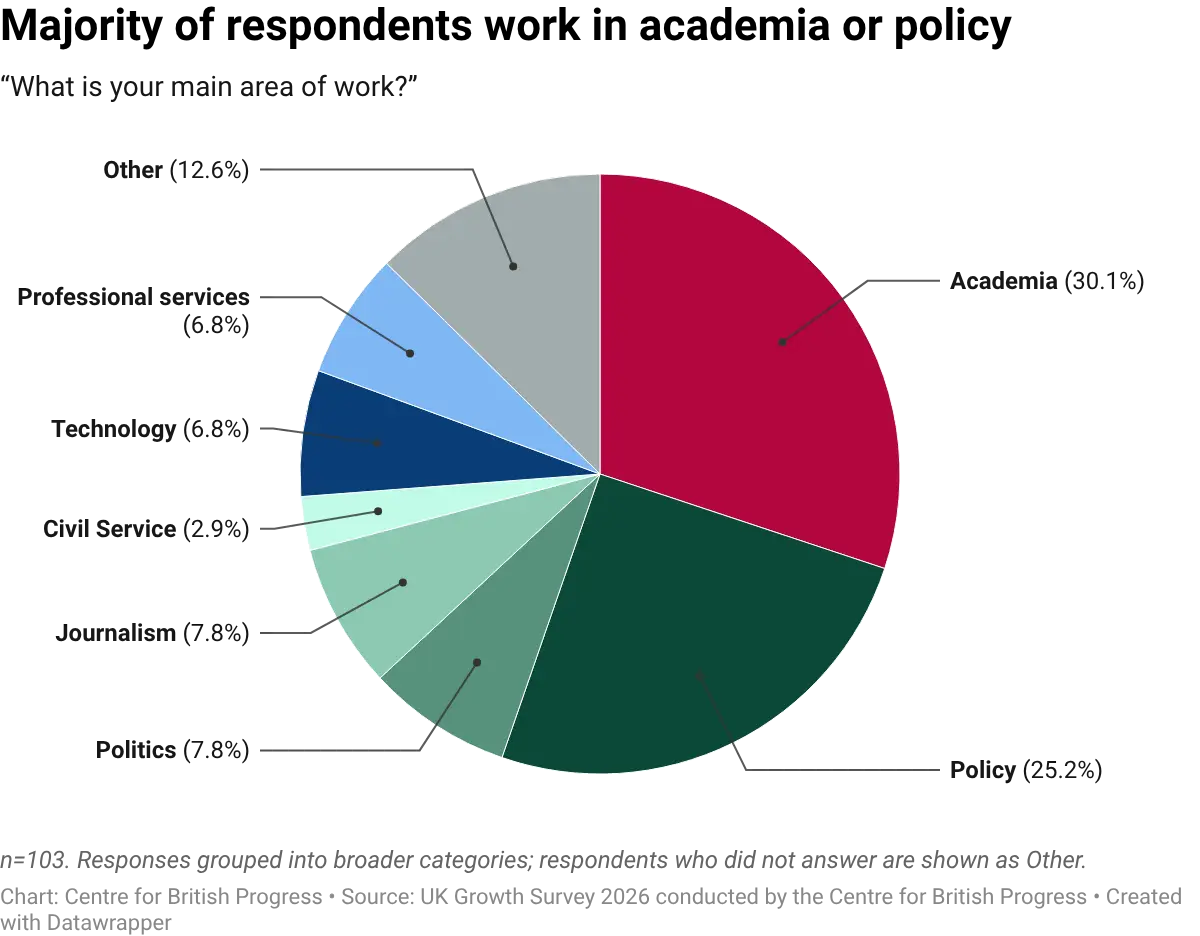
This year we had more academics – 30.1% of respondents – and about a quarter work in policy. The rest included individuals in the private sector, civil service, journalists and politicians.
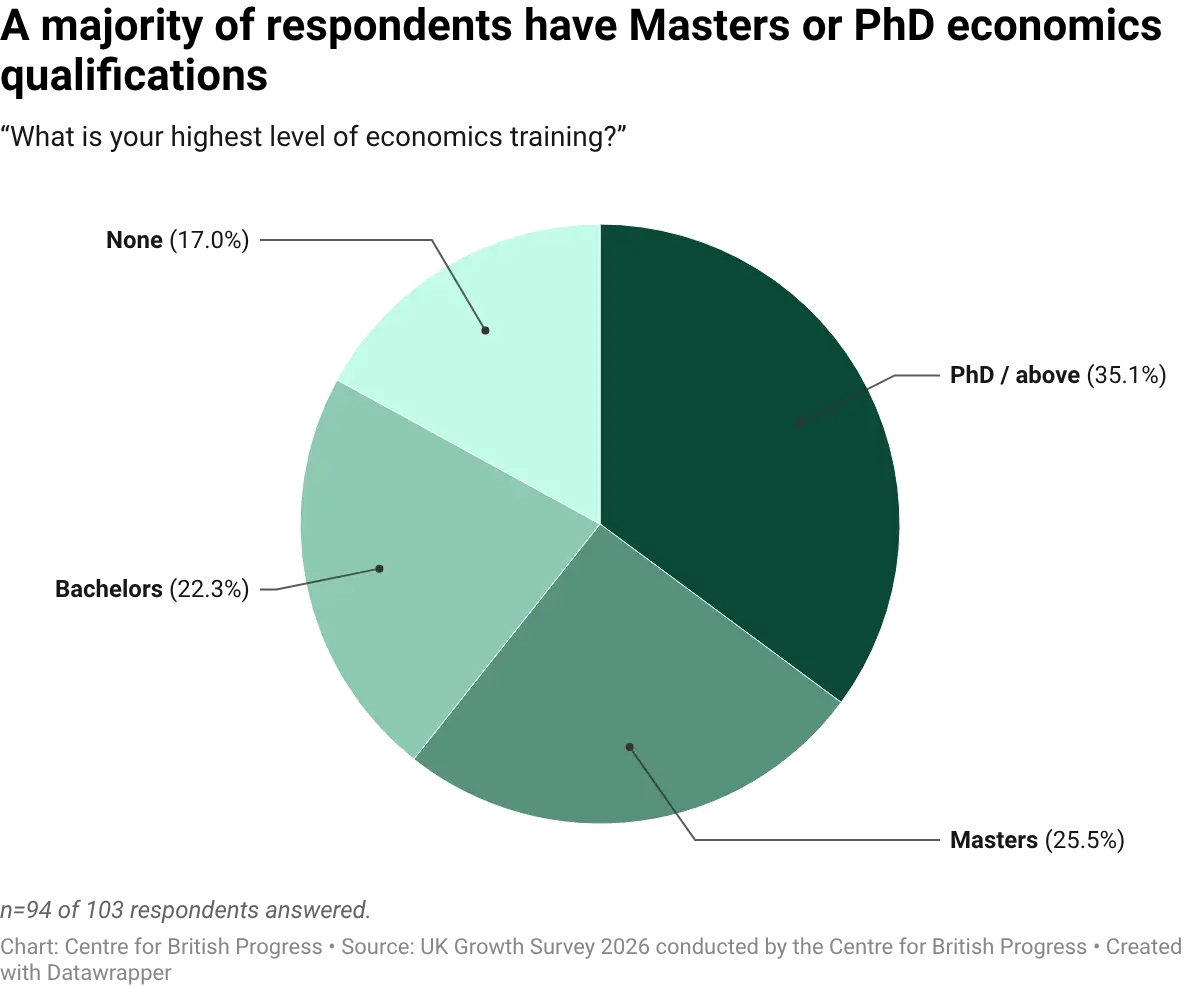
We intentionally chose individuals with expertise or backgrounds in economics. Over 35% have a PhD in economics and the vast majority (83%) have degree level training in economics.
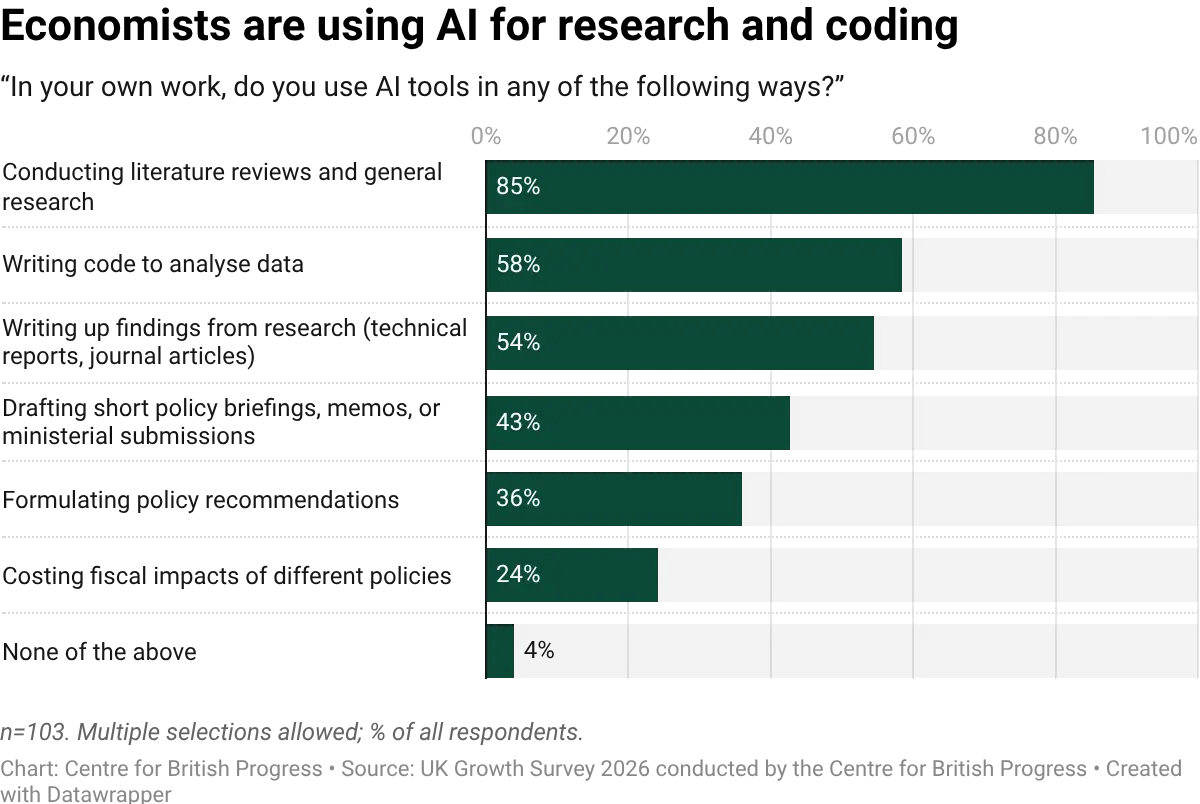
We were interested in how our respondents use AI tools in their own work, given the significant rise in AI’s research capabilities over the last year.
We found that respondents were most likely to use AI to conduct literature reviews and do general research, and a majority (of those who answered this question) use it to write code to analyse data. Only 4% said that they did not use AI for any of the tasks we listed.
If you have any questions about the results, methodology or policy implications of this survey, we’d love to hear from you! Please email [email protected]
For more information about our initiative, partnerships, or support, get in touch with us at:
[email protected]For more information about our initiative, partnerships, or support, get in touch with us at:
[email protected]