.webp&w=1920&q=75)
Table of Contents
- 1. Summary
- 2. What are street votes?
- 3. Why street votes will work
- 4. A UK example in practice
- 5. Impact
- 6. Authors
- 7. Appendix
Summary
Britain’s housing shortage restricts the housing options of ordinary people and drives high housing costs, but our adversarial planning system is simply not delivering the number of homes we need in the right locations. The Labour Government has made progress on its pledge to deliver 1.5 million homes with planning reforms such as grey-belt release. However, this alone will not be enough to meet the scale of the challenge. The Government risks missing its housing target while ordinary people miss out on the higher living standards and growth that new homes would provide. Lengthy, adversarial processes are not the only route to deliver homes.
In expensive cities around the world, resident-led schemes like street votes have successfully boosted housebuilding. Where residents are able to drive change, the tangible benefits go to those communities that welcome new homes and create positive plans. Street votes offer aspiration that is rooted in community, not individualism. In Britain, this could be Labour’s next big home building policy.
In a street vote, residents get together with an architect to collectively design and then agree on new rules which allow more housing on their street. Those rules could be a design code for home extensions or for new, extra homes on the street. In a similar system in Seoul, this often meant two new flats for owners in the new apartment buildings built on their land – one for the existing resident, and one for their adult children. A strong motivation for NIMBYs to become YIMBYs.
Based on the examples of cities that have schemes similar to street votes, street votes could:
- Deliver 30,000 new homes per year in the parts of the UK with the biggest housing need.
- Deliver them quickly because they reduce our reliance on large schemes with slow build-out rates and deliver permissions across multiple sites at once. We could see the first houses delivered with street votes before the end of the Parliament.
- Produce more attractive and sustainable streets because residents design the street that they want to live in, and any new homes are in good locations.
England can be the first nation to implement street votes.
Implementing street votes requires just one final push from the Government. MHCLG has already consulted on the detailed rules and completed 90% of the required legal drafting. The Statutory Instruments could be laid before Parliament with a few months of additional work by the team of 4-5 officials and external individual specialist lawyers who were previously working on them, plus a few months to await responses from statutory consultees and laying before Parliament.
And it is a ‘no regrets’ policy. Even if they deliver very little, the cost of allowing street votes is minimal because no homes would be built without local support. They could, however, deliver thousands of new homes in areas of highest need. This is why street votes are supported by leading economists including Jonathan Haskel and John Fingleton, leading lawyers including Christopher Boyle KC and Neil Cameron KC, architects like Russell Curtis and Dr Riëtte Oosthuizen and housing activists from campaigns including Generation Rent.
.webp)
An illustrative comparison of the status quo process and the community-led process of street votes
This piece was co-published with Labour Together.
What are street votes?
- Street votes are a democratic mechanism to allow communities to design and vote on planning rules that allow more housing on each plot on their street. To pursue a street vote, local residents work together to develop a plan for their street that meets various minimum legal requirements. If this plan is agreed by at least two-thirds of the residents then they receive automatic planning permission to perform the work.
- The residents have a strong reason to support the plan because it will let them expand their home, adding more space for their family, or let them share in part of the uplift from adding extra homes on their plot.
- Street votes give local people the power to improve their own communities. They can therefore help to detoxify and enable homebuilding by focusing on areas and designs that have strong local support.
- Helpfully for local authorities, a single street vote process can efficiently deliver planning permission for multiple homes on many sites at once, unlike standard planning processes.
- Street votes contain important protections to address the concerns of neighbours on other streets, with strict height limits and rules to prevent overlooking.
- When development starts, the owner or builder is required to pay the existing Community Infrastructure Levy (CIL) which contributes to new, local infrastructure.
- A homeowner is under no obligation to exercise a street votes permission for their own home and every homeowner only pays for building work they choose to do on their own home. There will be some residents who do not vote for a street vote while the majority of their neighbours support a plan. These residents cannot be forced to do anything with their own property. But they will benefit from the boost to their own property value from the new planning permission attached to it. If they have a mortgage, the increased value may help them refinance at a lower cost due to their increased equity in the home.
Why street votes will work
- Street votes enable urban intensification with the consent of existing residents. This is crucial because it makes the policy durable: Labour won’t lose swing voters opposing drastic changes in their neighbourhoods or face complaints for relying on large developers.
- This learns from previous attempts at urban densification that caused significant local backlash when residents disliked changes to their neighbourhood’s local character. Croydon’s small sites policy is one such example of an ambitious planning reform. The policy delivered over 2,000 new homes in three years by permitting replacement of existing houses with multi-unit buildings. Residents fought the changes and the Labour Mayoral candidate in the 2022 elections promised to reverse them. Labour lost that local election: the local authority's bankruptcy was a primary factor, but planning policy featured as a top issue in Tory campaigns and on the doorstep. By contrast, changes under street votes can only happen where residents strongly support them.
- Resident-driven planning policies that allow homeowners to increase density to meet local need have shown high take-up. Haringey Council’s planning rules enable residents in South Tottenham to extend their properties upwards. Almost 60% of eligible homes have now done so, meaning the same area now has enough housing space for over 1,000 more people – alleviating existing overcrowding and creating much needed larger family homes.
- With an ambitious street vote, many homeowners could get permission for additional homes on their plot and raise the value of their property by £500,000 or more.
- The local nature and democratic legitimacy of street votes allows them to go further than would be permitted on a given street via current NPPF reforms on densification. Those most likely to object to urban densification – residents of a project's street – are, under street votes, turned into supporters for the simple reason that they benefit too.
- Notably, street votes will have an impact on land that would otherwise never be available for development. It would take a brave builder or housing association to buy a row of bungalows in Bromley and apply for planning permission with little chance of success, but residents can be persuaded by the potential substantial benefits to do a street vote without any need for risky land assembly in advance.
- The incentives are clear for residents. Their property value rises as they gain planning permission, and they can choose to develop, sell, or team up with a small builder to maximise this benefit. This is already widely done with attic conversions and rear extensions where building cost per square metre might be £3,500 but every additional square metre can add £6,000 to home value in an unaffordable area. The greatest impact will be in London and other constrained cities. This is also a similar principle to London’s successful estate ballots - residents vote to regenerate because they directly benefit from better homes. Builders who use a street vote will have to make a CIL contribution to the council in respect of each property, which can be used for community benefit.
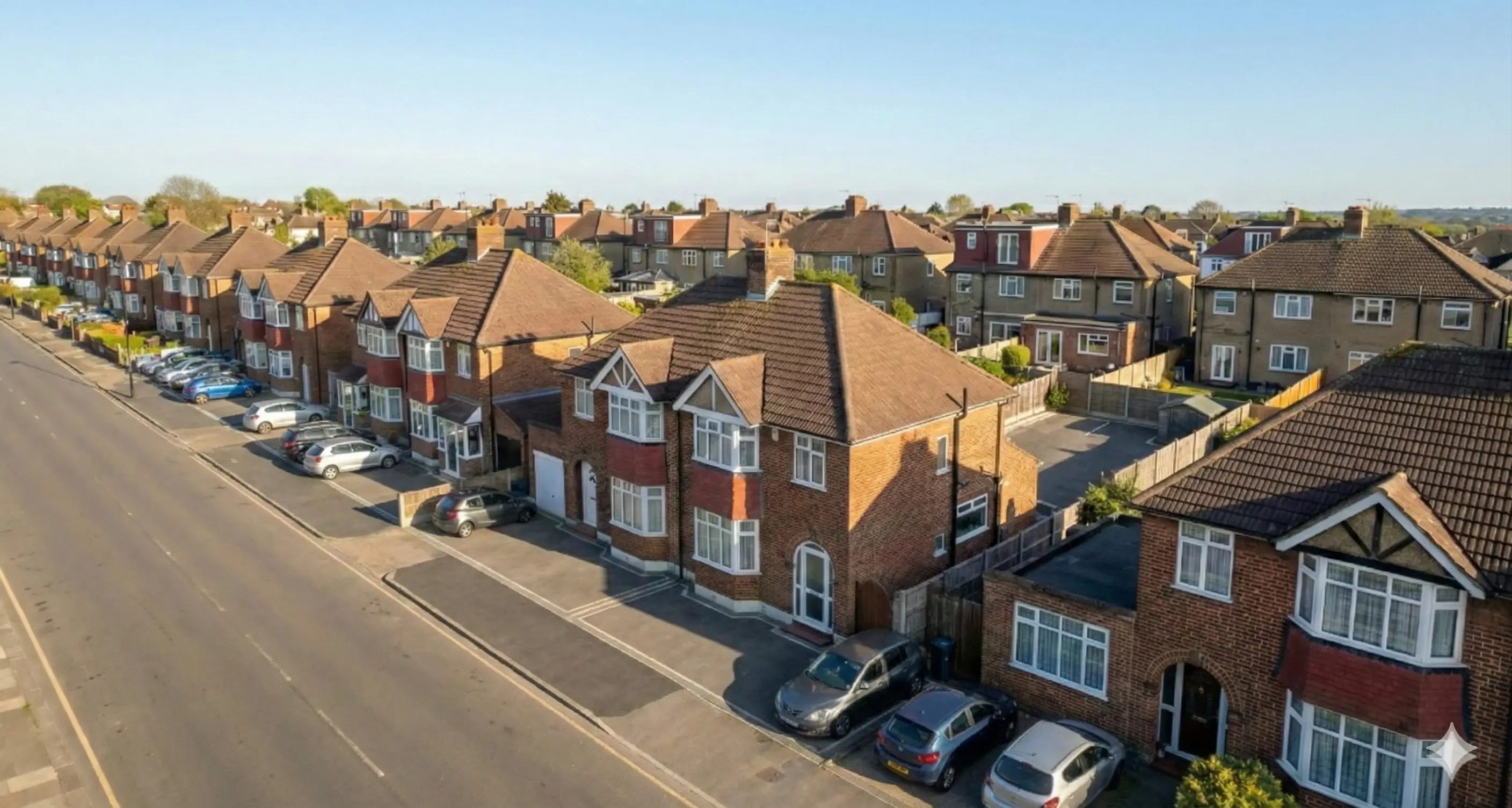
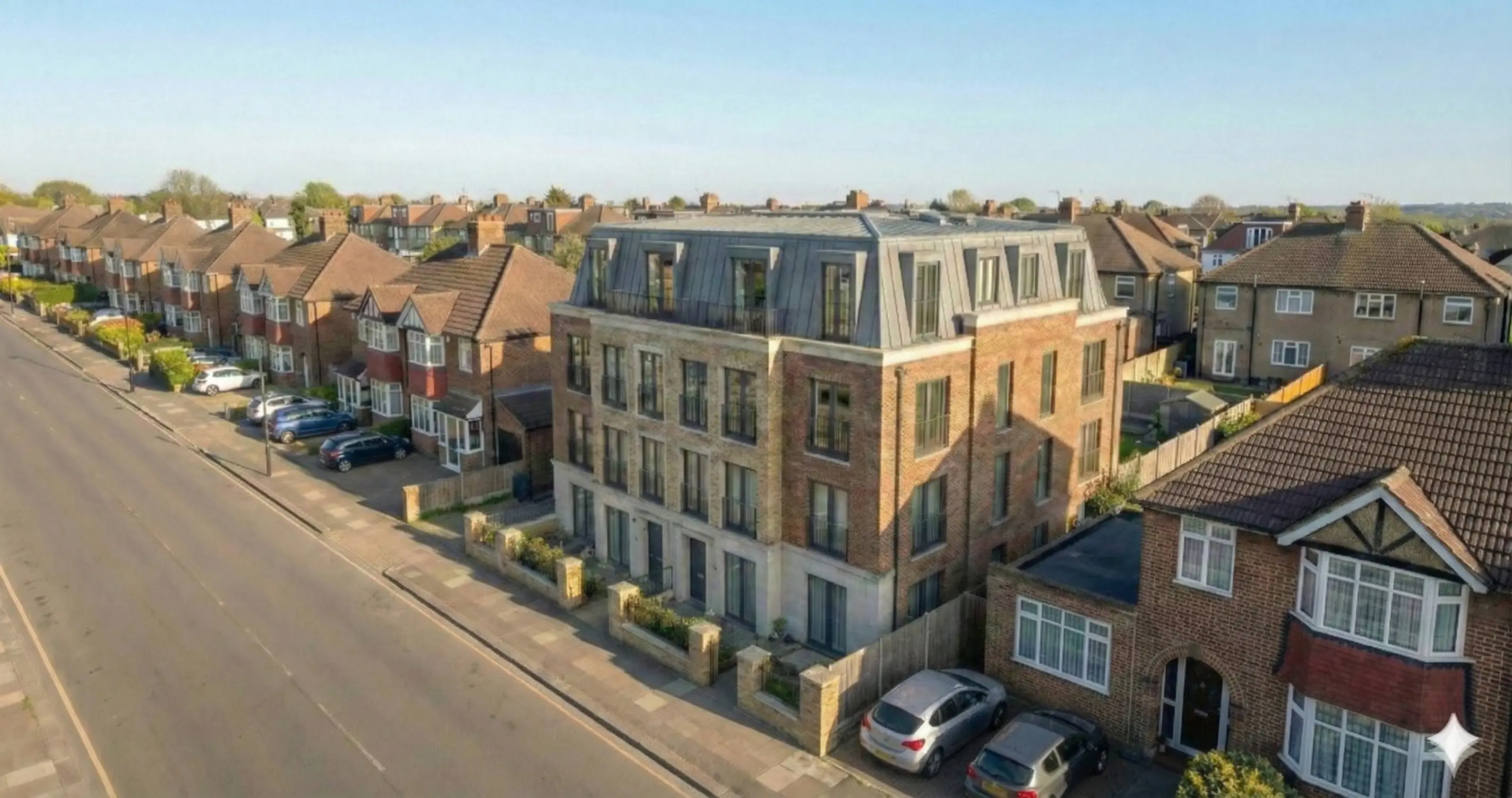
A candidate street for a street vote. Images of a representative street vote generated with Google AI.
-1.webp)
The street vote can permit redevelopment on multiple sites on the street, in accordance with the designs chosen by residents.
- Street votes learn from successful international examples of reform that build support for new homes from South Korea, Tel Aviv, and Democrat-run Houston in the USA where similar neighbour-led schemes have delivered tens of thousands of homes without negative political consequences. Further details are given in the appendix.
A UK example in practice
- Eight households on Hafer Road in Wandsworth collectively agreed to demolish and rebuild their ageing block of flats to accommodate the needs of their growing families.
- Their new development had 16 homes, doubling the number on the site and increasing total floorspace by nearly threefold. The land value uplift from the construction of eight additional new homes (estimated at £8 million in 2016) funded the whole project.
- Residents benefited from newer, larger family homes designed by Peter Barber, all paid for through better use of their existing plots.
- Under current law this required a lengthy and expensive process. On a whole street, rather than a single block of flats, street votes would allow a two-thirds majority of residents to collectively agree rules and limits, and then each household can proceed at their own pace without further back and forth with the council’s planning team. Because street votes create a planning permission, not an obligation, unanimous consent from every flat would still be needed to demolish a block of flats. But the block on Hafer Road had unanimous agreement.
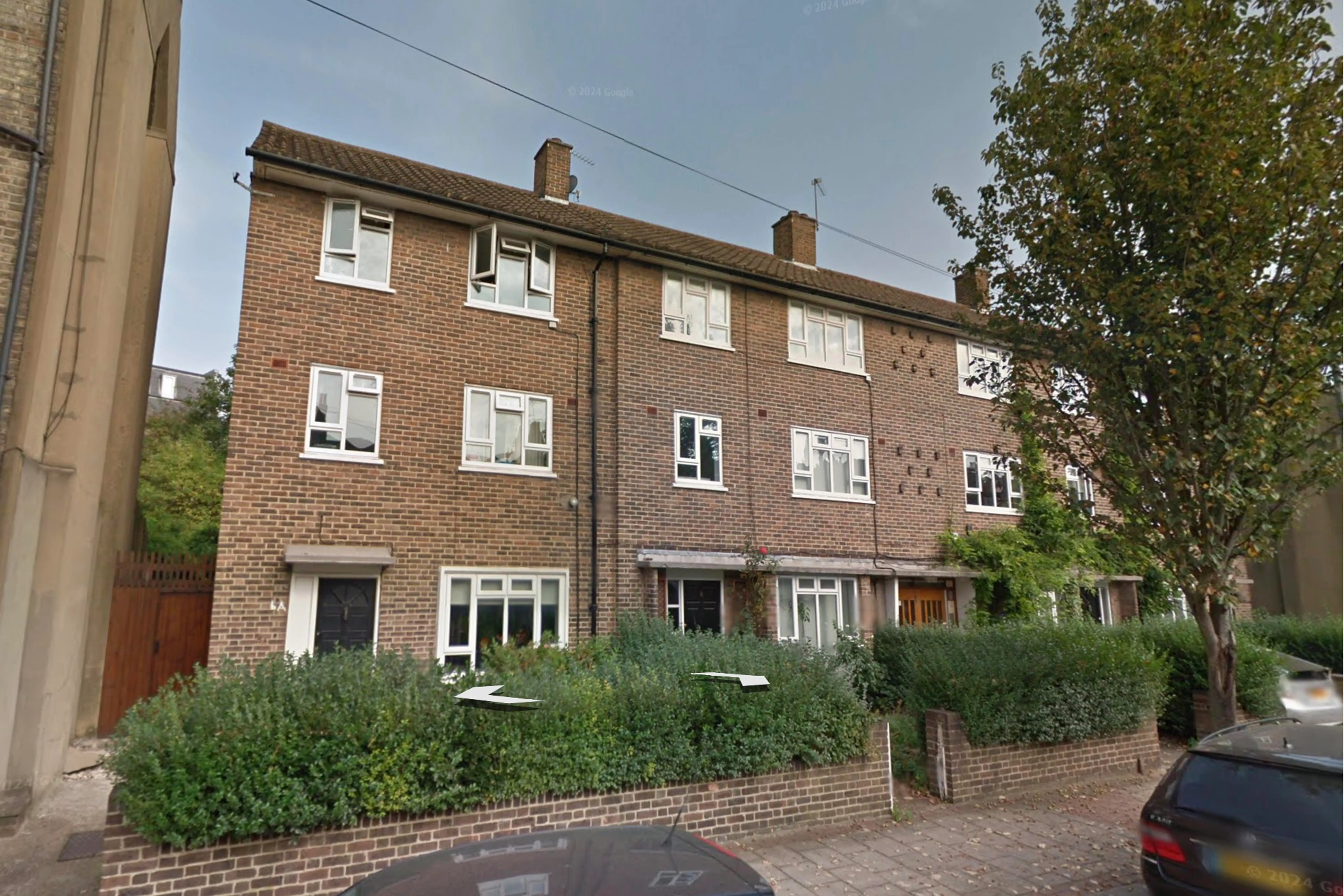
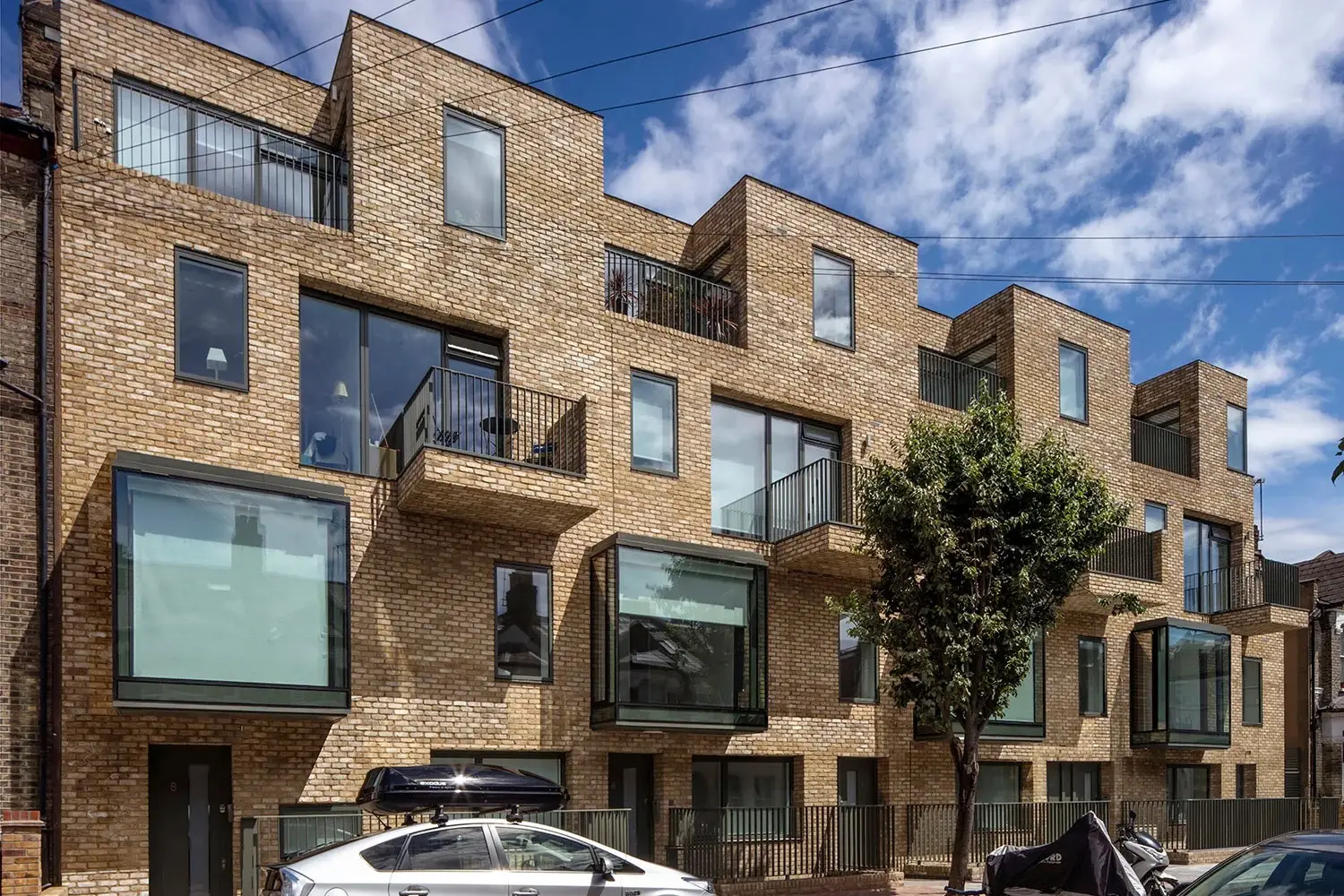
Before and after images of Hafer Road
Impact
- Our modelling suggests that implementing street votes would significantly raise housing delivery soon after implementation.
- The modelling makes various conservative assumptions. It imposes a high minimum threshold below which homeowners will not bother to do a street vote: in the central case homeowners will only pass a street vote if they receive a profit of at least £2,500 per square metre.
- In our central case, street votes would deliver over 28,000 homes/year, of which 17,800 homes/year would be in London. This is based on an extremely modest take-up rate in London of only 0.17% of households per year. Most of London’s suburbs have vastly lower housing density than older residential areas: Pinner, on the Metropolitan Line, is increasingly unaffordable but only a fifth as dense as the mansion blocks of leafy Maida Vale.
- If we assume street votes will deliver as much housing as analogous (but different) reforms in Houston, Tel Aviv or Seoul, that would imply delivery of 24,000, 48,000 or 13,000 additional new homes per year respectively in London alone.
- Street votes will deliver the most new homes in the places that are most expensive.
- These are typically the most productive parts of the country, boosting growth and fiscal revenues.
- Street votes can also help to add homes in the most environmentally beneficial way: through densification of areas with public transport connections, reducing the need to use a car for daily needs and reducing carbon emissions.
- A street vote can lower the costs of doing commonplace extensions so that residents could utilise the process for more affordable home improvements, boosting their living standards. This means that street votes will be attractive to residents even in areas with lower housing costs.
Appendix
Appendix 1: Street vote rules
- Street votes give individual streets the power to effectively create zoning and design rules to allow more housing on their street by voting to approve a ‘street plan’. In some areas homeowners will be able to permit a 10x increase in the number of homes.
- The detailed rules below ensure that the impacts of development are felt primarily by homeowners on the voting street, who will substantially gain most from the development. Those on neighbouring streets are protected by light planes and other limits.
What a street vote can permit
- A street plan, once adopted, grants permanent planning permission for each landowner to redevelop their property as allowed by the plan. It cannot restrict other routes to get planning permission.
- Other major rules include the following:
- The street plan cannot allow building on more than 25% of the back garden.
- If any green space is lost through development (including that 25%), it must be made up for with green roofs or roof gardens – there must be no net loss of green space.
- Any new development must also fit under angled planes extending upwards from the boundary. These ensure that neighbours are protected against overshadowing.
- The maximum height that can be allowed via a street plan is restricted based on the population density of the surrounding areas. In the most densely populated areas, street plans can permit development up to five storeys; in rural areas, street plan development will usually be capped at two; in suburbs, at three or four storeys.
- In addition to those heights, homes can have either one (in lower density areas) or two (in cities) ‘set back storeys’: unobtrusive additional floors that are set back from the main facade so they add floorspace without visual impact on the street or neighbours.
- A street plan also contains design rules allowing the residents to ensure the new homes are of high quality.
What is a street?
- For the purposes of a street vote, a street is usually defined as one would expect: a continuous run of homes (on both sides).
- Most streets end where they are the minor road at a junction. For other cases, MHCLG has developed extensive rules defining a ‘street’ for these purposes, intended to cover a wide range of edge cases.
Where are street votes permitted?
- Streets within National Parks, Sites of Special Scientific Interest, Areas of Outstanding Natural Beauty, conservation areas and other protected sites are excluded.
- In addition, homes built before 1918 and any listed buildings are excluded from permissions granted via a street vote.
- Streets must contain at least ten homes (a flat is a home in law) to be eligible.
The process
1. Drafting a street plan
- Residents of the street work together, perhaps with a local architect or builder, to prepare a street plan. This includes detailed rules about what development will be allowed on the street and its design. The residents must also engage with their local area and statutory consultees.
2. Triggering the vote
- Proponents of the plan, known as a ‘qualifying group’, must collect signatures from a majority of residents. Residents, whether homeowners or renters, must be registered to vote in local elections at an address on the street to participate.
3. Examining the plan
- The Planning Inspectorate examines the plan to ensure it meets the legal requirements to proceed. The inspector will also consider any responses from statutory consultees as well as people in the local area.
- The inspector can approve a plan to go to a vote, reject it, or suggest amendments to the plan so that it can meet the legal requirements.
4. Voting and post-approval
- Once a plan has been approved by the Inspectorate, it proceeds to a vote. Only residents who are on the electoral roll are eligible to vote. For a plan to pass, and become valid, granting planning permission, at least two-thirds of those eligible to vote must vote in favour. This ensures that the outcome represents a consensus view of the people who live there, not absentee landlords.
The permission
- Once a plan has passed, a Street Vote Development Order is made which grants permanent permission to each plot on the street for development consistent with the plan, without need for further approval from another body. No homeowner is required to develop until they are ready and each plot can be developed separately. There is, however, a requirement that the redevelopment of a pair of semi-detached homes be simultaneous.
Appendix 2: Model details
Medium case
Estimated floorspace built (total) | 36.0 M | sqm |
Estimated homes per year | 28.2 K | h/yr |
Extra construction spending | £11.4 bn | /yr |
SDLT to HMT | £1.1 bn | /yr |
Additional council tax (year 1) | £59 M | /yr |
Additional council tax (year 15) | £892 M | /yr |
Assumptions
Elasticity | 1.8 | Source: Redfern Review | |
Average size of new homes | 85 | sqm | |
Build out time | 15 | years | Duration of the model |
Rental yield | 5.00 | % | Used to calculate cost of interim housing during construction |
Case | Required profit for homeowner to participate (£/sqm) | Net new homes/yr |
Low | £3,500 | 11.8 K |
Medium | £2,500 | 28.2 K |
High | £2,000 | 53.1 K |
Appendix 3: Similar policies in practice
South Korea
- The system of Joint Redevelopment Projects (JRPs) allowed owners to vote to intensify their area, adding significant density which has in turn made Seoul’s public transport system more viable.
- At their peak, JRPs apparently accounted for nearly half of the new condominium units being built in Seoul in the mid-1990s.
- Under JRPs, absentee landlords were able to vote, whereas with street votes only residents get a say – including tenants.
- Street votes cannot allow the sort of tower blocks seen in Seoul, but instead an intensity much more appropriate for British suburbs.
Tel Aviv
- The TAMA 38 scheme allows flat-owners to vote to extend, renovate, or redevelop their building. This policy has driven a significant proportion of new housing in Tel Aviv in recent years: 35% of all new homes built in 2020 were enabled through TAMA 38.
- Street votes are designed with similar incentives, but are based on much stronger principles of value capture, and will generate more income for local authorities than TAMA 38.
- Street votes focus on each street as a whole, rather than individual blocks, to ensure that local communities are protected with strict rules.
Houston
- Minimum plot sizes were reduced in 1998 and 2014 to allow more homes per acre.
- In order to reduce political resistance, blocks and streets were given the power to choose by qualified majority to opt out of that change.
- In practice, much of the city has not chosen to opt out. The opt-out mechanism therefore allowed pro-housing change by sufficiently reducing the political resistance.
UK examples under the existing system
- Various communities (like Hafer Road) have managed, with great effort and a helpful local authority, to lead intensification efforts in the UK under the current system. Perhaps the best example is in South Tottenham.
- The Haredi Jewish community faced severe challenges, with large family sizes cramped into unsuitable two-storey Victorian houses. Thanks to visionary work from the local Labour-led council, especially from Claire Kober and Joe Goldberg, a right was created to add 1.5 storeys to each home in the neighbourhood, in keeping with existing design.
- Another such example is Fitzroy Street in London’s Primrose Hill. Residents agreed with the council to add mansard roofs – they were granted permission on condition that they were all added simultaneously, and that the roofs were in the style of the existing buildings. It was carried out by leading architecture practice HTA Design.
For more information about our initiative, partnerships, or support, get in touch with us at:
[email protected]For more information about our initiative, partnerships, or support, get in touch with us at:
[email protected]